Hi there,
I don't know who reads these, so leave a comment. I see how many views posts get and I wonder "hmm, who saw those words?"
Today is Sunday. I woke up tired because I took two 10mg gummies yesterday, but having no fat in my diet, I accidentally did not enjoy the effects of cannabinoids in my perception. However, them being in my system, I got a good hangover. Usually, 10mg is plenty and I didn't realize that fat was needed to carry the THC into my system!
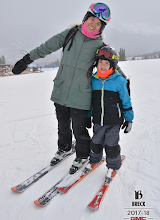
I recently moved to Breckenridge, Colorado. Weed is legal here, so it's like I've come out of the closet. I never was in the closet, even in Maryland, but I was discreet about it. I started in college and it helped me with some PTSD. It helped me wake back up into life, and it continues to wake me up from dullness. Contrary to the stereotypes, cannabis helps me be sharper, more reactive to my present environment, and not so caught up in the mental hubbub. I got a job budtending in Breckenridge and I'm very excited about it. I've got a lot to learn. So far I've learned about distillates, vape options, concentrates, wax, how THC turns into CBN so old weed isn't bad weed, it's just misapplied due to being misunderstood!
Anywho! Moving into a new town is fun. I miss my friends and my roots are in shock, but I am transplanting myself once again in order to enjoy fresh powder winters and escape the sprawl of the DC-suburbs. Finally! I've escaped! \o/ <(yay!) ~And here in town there are great restaurants that I never go to because they're $$$$, but I enjoy that they're there. I like going to the Breckenridge Brewery because my friend works there and they have gluten free buns for the burgers. And I am looking forward to a "night about town" to give the Motherload Tavern some of my time and money. I think it'd be fun! There's open mic nights and karaoke nights there. Another establishment that regularly jams is the Hangar, way off Main street, on Airport Rd (a place named in anticipation of an Olympic-imported airport that never happened). It's close to my neighborhood in Peak 7. I love this little part on the northern end of town, and I want to start visiting the Hangar regularly since it's the closest "musical venue" around. I really like singing and making music. It's therapeutic. And although I aspire to perform in front of people in a fantasy-kind-of-way, whenever confronted with the opportunity to do so, I can feel my temperature rising and the skin on my face getting thick with embarrassment.
Today as I strummed out some tunes on the ukulele I considered the possibility that I don't really like how the ukulele and I sound together. After a few songs on the uke, it all sounds like the same tingy strings with a different set of chords, with a different message in the lyrics. I enjoy singing and accompanying myself, though, and letting stuff out! I switch over to the piano when the sound becomes unbearable, and play some tunes there. It's better on the piano. Any oaf can play ukulele, but piano takes at least a few hundred hours of practice, and I've put that time in, so there's at least a little pride in that. However, the ukulele can be learned in a few hours, and I can't master unique strumming patterns, so it all sounds the same. *shrug* I'm buying a low G string for ukulele and will see if that changes my mind at all. Maybe it will take away from the tinny association and make it a fuller sound. If that doesn't do the trick to satisfy me I'll get a loop pedal and play with that! That always looks pleasant when I see people showcasing their experiments.
Even my kid doesn't like to hear me play the ukulele. So that's gotta be saying something!
Well.... Why am I blogging again? Moving in, making music, and marijuana. Okay, I've covered most of the topics. A little more on moving in:
Breckenridge has so much to do. Just yesterday the town put on an amazing Fall Festival for the kids and kids-at-heart. There were crafts like pumpkin painting and of course the bouncy castles, face painting, and balloon arts... typical, but the unique twists on the fall festival were impressive! (And yes, that's where I was disappointed that my milligrams weren't kicking in due to lack of fat intake. Plenty of sugar! Plenty of fruit! Plenty of veggies!
There's a lot to do here. Today I climbed at the rec center, chilled at home, and then went on a lovely mountain bike ride. Tomorrow it's Monday. Back to the work week!
Cheers!
Sunday, 15 October 2017

Wednesday, 11 October 2017
Patriotism?
I have almost reached the regrettable conclusion that the Negro’s great stumbling block in the stride toward freedom is not the White Citizens Councillor or the Ku Klux Klanner but the white moderate who is more devoted to order than to justice; who prefers a negative peace which is the absence of tension to a positive peace which is the presence of justice; who constantly says, “I agree with you in the goal you seek, but I can’t agree with your methods of direct action”; who paternalistically feels that he can set the timetable for another man’s freedom; who lives by the myth of time; and who constantly advises the Negro to wait until a “more convenient season.” Shallow understanding from people of good will is more frustrating than absolute misunderstanding from people of ill will.—MARTIN LUTHER KING JR., “LETTER FROM BIRMINGHAM JAIL,” APRIL 16, 1963
Since Trump was elected there has been a controversial feeling in the air, a lack of pride at being an American. It reminds me of when Bush was president, but fiercer. The xenophobia and racism is really obvious now. I grew up multi-racial, with an international family. I was always proud to be an American for some reason, perhaps because it set me apart from the rest of my family. But when you learn about American history there is shameful behavior there that hasn't been amended yet. That's not just in American history. That's present in every nation's history. Perhaps humans are just vicious and suffer from tribalistic mentalities that have yet to be overcome.
Patriotism in America is defended with a religious vigor that is dangerous. It is not unpatriotic to take a stance against the government and the existing power structure. That is progress. We need to move forward in history, and those who are so proud that they fail to see the shortcomings of their country, their religion, or their race are going to stubbornly refuse to make amends.
Police brutality is real. Coupled with unconscious bias, the power that a police officer has will lead them to do horrible things. See the Stanford prison experiments. It is not possible for us to live separately anymore. We must coexist.
Until now I've never lived in a place such as this where conservatives and liberals live so closely together. I have not lived anywhere so white. Since white and middle-class people have so much privilege, it is their responsibility to help the lower-class and unprivileged people to thrive. Recognize that even though privilege is not something they asked for, yet have compassion for those who are discriminated against and to whom the deck is stacked against. Help them in whatever way possible, finding opportunities and passing the word along to appropriate connections. Give black people money for their services and never ask them to do work for free. That still happens. See the criticism that Safety Pin Box has received for being a business and not a non-profit.
Being privileged doesn't mean life doesn't contain hardship. Everyone has problems, it's true. But when defensiveness arises, it's not conducive to the conversation to point this out. Men don't have anything to add to conversations about women's rights, straight people don't have anything to add to conversations about LGBT rights, and white folks don't have anything to add to conversations about the black experience. The person in the demographic that is the beneficiary of current power structures needs to pipe down and listen. That's all.
Furthermore, when black people are taking a stance on police brutality or systemic injustice, it is not the place of the beneficiary of privilege to disagree with their tone of voice or tactic of protest. That was why I shared the quote from MLK at the beginning of this post.
Someday, when black lives matter and aren't treated any differently than white lives, then we can say all lives matter. Until then, white, pink, yellow, red, brown, and black folks who believe that we can create a post-racial world within our lifetime need to show up on the streets, put our bodies on the line, and do risky shit and be a full-on comrade, not just an ally... Not just add hashtags and share knowledge, which can be somewhat influential, but show up in real life. It's time to talk to your racist friends and neighbors and call them out/in to being a better fellow human... an actual patriot.
Sunday, 8 October 2017
Learning Web Development to work remotely
My internship as a Montessori Teacher ended. I've learned valuable classroom management skills, interpersonal-social mediation, and have let my artistic side out of the crayon box. In the D.C. area, the salary for a Montessori teacher can be anywhere between $30 and 60,000. I was making the lower end of that. Tuition is higher in the DC area, from between $10-20,000 per school year depending on if you get financial aid or not. My benefits of cheap and lovely housing made living on a low salary with high tuition possible.
Now that I have moved to the Rocky Mountain area of Colorado, the tuition of a nearby Montessori school is $2-10,000 per year, and there is less room for growth for the teacher. The cost of living is expensive here, so I am switching careers. I can imagine going back to teaching a Montessori classroom. It's work that I enjoy day-in and day-out. However, the lack of flexibility and the high cost of living here is not a good fit to take it on. I want to be able to take advantage of powder days on the slopes.
I've started learning web development. I have always wanted to create websites and I enjoyed learning HTML and CSS. It's fun to make websites come to life, so I will start creating a few sites to build a portfolio. I am learning Java Script which, at the moment, is not clicking. It will be a few years of learning different coding languages, but my hope is that it will lead to a lifestyle where I can work remotely and have the flexibility to live in a new definition of luxury, and be paid a living wage.
New luxury? What's that? It used to mean a corner office and fancy material goods. I carry a minimalist-inspired perspective, where my things are only here to support my hobbies. I don't buy new clothes to keep running on a hedonistic treadmill. I only buy consumable goods. The new luxury is to control my environment such as choosing when and where I work.
There are many jobs that can be done remotely, and companies would lower their overhead if they were more open to letting their employees work elsewhere. The anxiety that companies face stems from their lack of knowledge regarding technological tools such as Basecamp, Skype, Virtual Private Networks, Timeclick software, Screen Capture/Share tools, et cetera infinitum!
breastfeeding toddler bias
I just read this blog article about Chloe Jo's experience of being told to nurse her toddler elsewhere. Its an interesting personal account. Here's an excerpt of what she says in which she defends her position.
"helps with the child's ability to mature" is a vague way of putting it. More precisely, as the child grows older, the relationship becomes more complex and the mother will (usually) say "no, not now." because there will be uncomfortable situations. Personally I feel uncomfortable nursing my toddler in public, or in front of men. So i tell him "not now, not here." And I usually show him why, because eventually he will show me he understands my reasoning.
So it "helps him mature" because I communicate about my needs, preferences, and ability to nurse him... If I'm undernourished or emotionally not available to nurse him I tell him about that, too. And he understands! So through empathy, he also matures.
Emotionally it helps us both because I lie down with him, calm myself down, become present, and cuddle with him. Being with him all day I can sometimes get into the mode of 'doing things' and not investing in intimate moments with him, so it guarantees intimacy for these days until he gets older and we'll show intimacy in different, more mature ways.
She forgot to even mention the opiates in mamas milk and how teething pain disappears! My son has molars coming in but he is so high on milk he is well humored and chipper.
A toddler needs many other factors in order to grow into a person who "feels good about himself." Unconditional love, non-excessive praise, a balance of being assisted with tasks as well as being granted independence, et cetera. The most important thing, though, is to continue thinking about parenting and our effect on our children, and to be humble about our abilities. Because one day if our child comes up to us and says "Mom, you always praised me on my intelligence and talent, but never because of how hard I tried, and as a result I give up very easily now if i'm not immediately good at something." Will you get defensive, or will you admit that you've fallen short? In that instance, your child needs you to concede your shortcomings, and that can be difficult to do.
So, breastfeeding is fun and wonderful and a great place to work out relationship and set a foundation, but there is so much in parenting. breastfeeding can sometimes become controversial when a third party gets involved in what optimally is between two people. Its a personal thing, and doesn't reflect as to the quality or even the health of the resulting child.
I breastfed my son until he was a month short of his 3rd birthday. Now he is 7, and I see no negative effects of having done so. We are comfortable being naked together, which is culturally different from many who shield their nakedness. I do see a negative effect from co-sleeping, though. He still wakes up and comes to my bed most nights. I know eventually he will stop, and I am uncertain about how I would do it differently... sleep-training and being non-responsive to a crying infant throughout the nights required for sleep-training doesn't sit well with me, but the amount of interrupted sleep I have gotten makes me consider it as a viable option.
Breastfeeding a toddler helps with the child’s ability to mature. Although some experts say a toddler who is not weaned will have difficulty becoming independent, it’s usually the fearful, clingy children that have been pushed into situations requiring too much independence too soon. A breastfeeding toddler is having his dependency needs met. The closeness and availability of the mother through breastfeeding is one of the best ways to help toddlers grow emotionally.
Breastfeeding can help a toddler understand discipline as well. Discipline is teaching a child about what is right and good, not punishment for normal toddler behavior. To help a toddler with discipline, he needs to feel good about himself and his world. Breastfeeding helps a toddler feel good about himself, because his needs are being met.
"helps with the child's ability to mature" is a vague way of putting it. More precisely, as the child grows older, the relationship becomes more complex and the mother will (usually) say "no, not now." because there will be uncomfortable situations. Personally I feel uncomfortable nursing my toddler in public, or in front of men. So i tell him "not now, not here." And I usually show him why, because eventually he will show me he understands my reasoning.
So it "helps him mature" because I communicate about my needs, preferences, and ability to nurse him... If I'm undernourished or emotionally not available to nurse him I tell him about that, too. And he understands! So through empathy, he also matures.
Emotionally it helps us both because I lie down with him, calm myself down, become present, and cuddle with him. Being with him all day I can sometimes get into the mode of 'doing things' and not investing in intimate moments with him, so it guarantees intimacy for these days until he gets older and we'll show intimacy in different, more mature ways.
She forgot to even mention the opiates in mamas milk and how teething pain disappears! My son has molars coming in but he is so high on milk he is well humored and chipper.
A toddler needs many other factors in order to grow into a person who "feels good about himself." Unconditional love, non-excessive praise, a balance of being assisted with tasks as well as being granted independence, et cetera. The most important thing, though, is to continue thinking about parenting and our effect on our children, and to be humble about our abilities. Because one day if our child comes up to us and says "Mom, you always praised me on my intelligence and talent, but never because of how hard I tried, and as a result I give up very easily now if i'm not immediately good at something." Will you get defensive, or will you admit that you've fallen short? In that instance, your child needs you to concede your shortcomings, and that can be difficult to do.
So, breastfeeding is fun and wonderful and a great place to work out relationship and set a foundation, but there is so much in parenting. breastfeeding can sometimes become controversial when a third party gets involved in what optimally is between two people. Its a personal thing, and doesn't reflect as to the quality or even the health of the resulting child.
I breastfed my son until he was a month short of his 3rd birthday. Now he is 7, and I see no negative effects of having done so. We are comfortable being naked together, which is culturally different from many who shield their nakedness. I do see a negative effect from co-sleeping, though. He still wakes up and comes to my bed most nights. I know eventually he will stop, and I am uncertain about how I would do it differently... sleep-training and being non-responsive to a crying infant throughout the nights required for sleep-training doesn't sit well with me, but the amount of interrupted sleep I have gotten makes me consider it as a viable option.
Maria Montessori, Order, Deviation, and Naturalization
I love this woman: Maria Montessori. She was a wise woman, born wise, stayed wise. She had a mother who believed in her and she was blessed with a good upbringing. She was perceptive to the struggles of the world and had a good heart that wanted to help. She was intelligent, and diligence fueled her life. I really admire this woman.
She created materials that are age appropriate and promote concentration naturally. She comes from a time when adults really tried to hammer in "education" into supposedly empty, blank-slated child, and she instead recognized that humans have an inner drive to learn and explore, and their interests shouldn't be thwarted.
I am so happy we have come so far socially that children quite regularly have chairs and tables that fit their height. Did you know that having furniture adapted to the size of children was her idea? We can even thank her for the proliferation of playgrounds. However, the toy industry and capitalism has created a cacophony of sounds and flashing lights and entertainment entrapments that don't nourish the growth of a child. They are certainly attractive, but so not spark real interest.
Babies and toddlers and children can concentrate, and given the right materials, they will do it willingly and naturally. Montessori observes that after "working" at a task of their own accord, they seem rested and at peace. In her day, children were made to memorize and do dull tasks and the common problem was that children became fatigued. Their willpower was being sapped!
Besides her observations on children, I appreciate her view on the necessity of the caretaker to prepare herself mentally, spiritually, emotionally, and physically for taking care of the child. The directress of a Montessori class needs to be self aware and contained in her manner, only intervening when a child is deviating and becoming disruptive. She needs to show how the materials are to be used and not allow them to be used inappropriately. The point of not misusing materials is controversial with Waldorf lovers because Steiner as well as Froebel values imaginative play. I did too, until I read the observations Maria makes, and then felt it out with my own experience. She had designed materials to teach them math, to teach them language. I have observed children in classrooms using these materials playfully without the interruption of a teacher, but they do receive lessons on the materials so that they can be used appropriately and the value can still be gained. Imaginative children will play. Surely some directresses will be stricter than others regarding how closely to follow the guideline of the materials. I have found that if a child is playing a lot, they enjoy making art. We can direct them away from the language and science materials that they are "misusing" so they can come back to them later and learn how to categorize scientific objects, or how to discover the initial sounds of language material.
Maria observed that children were given doll houses and toys to play with, but in her observation they preferred to do real work. She described dignified children who have a sense of order and self discipline. They are grounded and more concerned with reality and figuring out how it functions, organizing reality into categories of similarity and contrast. That is why it is called "work" and not "play", because according to Maria, a child's work is to build a person, an adult who will function in the world. And for this the child must understand it first.
And it seems to me, through observing my own son, that pretend play and imaginative play is a process of experimenting in the Mind, with ways that a world COULD work, and practicing by repetition what he already knows.
It does not really build much on top of worldview unless an adult is contributing real dialogue, and not creating fantastical fairy tales on top of reality.
Maria doesn't advocate against fairy tales, though. She says that at around age 7, when a child already understands basic reality, fairy tales become interesting because it is a platform from which to explore morality and sort out conflict of characters.
For a child younger than 6, however, fairy tales only confuse them about reality.
Personally, I love fairies and mermaids. However, I have never liked the idea of lying to children about Santa Claus. It seems unfair, deceitful and totally unnecessary. I know a few who have vivid memories of realizing the lie, and they are very atheist now, and I think there is a connection there.
Our parents shouldn't lie to us intentionally!
Anyway, Maria Montessori worked tirelessly until she died an old lady.
I admire Rudolph Steiner too, but female role models come along so rarely in my life. She enrolled in a boys technical school at age 14 and then med school in 1890 when no other women were admitted. She graduated with flying colors and amidst opposition and then represented feminist occupational movements by the time she was 27 or 29.
I'm 25 and I've studied diligently but not nearly enough compared to her!
Friday, 28 April 2017
Primitive pacifist anarchy
Growing up, I often thought about how people would have lived without the technology. How did the primitive people meet their needs and play? And as I thought about this question, I grew to envy the people who live in hunter gatherer communities working together in small groups because they would form close bonds with tribe members. Living in suburbia, going to school meant being surrounded by people who had other communities they belonged to other then the community we shared. There was little time to form close bonds. I even moved around every two or three years.
Not only did I envy the social wealth of primitive tribes, I also came to wish for their simplicity. They were concerned with providing food, shelter, safety and then making music and dancing. My dad worked as an economist, and was concerning himself with import, export, gross domestic product, and the connection between one economic measure against another.
We live in a world of billions of people each with a worldview of his own. What I'm about to say is my version of my worldview. I think the world would be a better place if everyone acknowledged that about each other at every waking moment. I see the world of humans as a fragile peace… There are passive aggression's going on daily, as we collide in our daily lives. Many different wars, internal and external, with different themes, and flavors of struggle. We encounter these struggles in our moment-to-moment existence.
The particular flavor of struggle that paints my world most often is the pull of a trans-human agenda, against nature's rhythm.
I think the majority of people would prefer a utopia, and could imagine a few common ways in which we could improve our current human condition. However we have inherited a civilization that was unconsciously created, not purposefully and conscientiously created. Our civilization came to be based on primitive instincts, instincts that have been left unchecked by reason and a rational mind and a moral, ethical mind.
I am uncertain as to the percentage of human beings that, if given a choice, would opt to live in an egalitarian society. Human nature has been shown to use power unethically when put into certain situations. I can deduce that those who have power, money, etc. would not choose to live necessarily in an egalitarian society, but that all others would choose to do so.
Because I have spent a great portion of my life envying primitive society, it's ironic to me that I have come to realize that we are at and remarkable time period In history, where egalitarian communities can be formed en mass and self government is more achievable. Resources are so wonderfully plentiful, though we are depleting them unnecessarily in stupid ways, in consumerist shallow ways and government strife is keeping resources from those who need it.
In just a little bit of time, I am hopeful that this new generation of technologists will rise up and create the egalitarian society that I have been craving, and return to the social wealth of the primitive tribe of hunters and gatherers. This struggle I see in my world is against the trans-human agenda to use up resources for the purpose of accumulating wealth at the expense of those in need of power and the necessities of life.
I am hoping it will shift with the connective capability of the Internet and the increasingly equal opportunities that the Internet can provide, and with the growth- oriented, morally conscious millennial generation. With the current administration and the 45th president, he who shall not be named, I have become an anarchist. Since democracy isn't really led by the people, and the powerful are the elite, the only option is anarchy. But it is possible and best to be an peaceful anarchist, using consensus decision making in small communities to self-govern. So that's my hope for true democracy run by people to emerge in the next fifty years.
Friday, 7 June 2013
Body language, breathing, and willpower
I notice body language. Fathers and mothers of toddlers are beginning to hunch over in perpetual assistance to their wobbly ones. I notice breathing. Mothers, unacquainted with the breath, getting caught in the whirlwind pace of two year olds and their intense emotional displays.
A practice to increase willpower was suggested by scientists: Whenever you think of it, adjust and improve up your posture. Results of the study showed that exercising that little bit of willpower helped improved other areas of participants lives, such as healthier lifestyles and increased financial well being.
Amy Cuddy presented a talk on TED about the power of body language, in which she presented her study that individuals who stood in a "power pose" rather than a disempowered pose for two minutes increased their testosterone levels and decreased their cortisol levels immediately and therefore performed much better in a stressful interview experience. A power pose, by the way, is something like extending your arms above your head like a champion, or putting your hands on your hips like wonder woman.
In practicing mindfulness we always return to the breath and thereby we notice the shallowness that happens when we begin to let our minds wander to stressful thoughts. Most of our day we don't ay attention to our breath, but we can always come back to it. I practice noticing when I feel anxiety and then deepening my breath around it. Anxiety doesn't help me find the creative solution. Frustration with children is just a fight against what is, and breathing helps regain a more beneficial, peaceful, happier perspective.
Most people breathe just enough to get by. It's contributing to disease and stress. Runners get to breathe a whole lot. Breathing might be the best part about sex, and without proper breathing, orgasm is impossible. It moves the energy through our bodies.
Willpower. Parenting uses up a lot of willpower! And studies showed that after doing exhausting and challenging tasks, participants had no leftover willpower to choose fruit salad over cake! it's good that I know that, because then I don't have to form a belief that my eating cake when it's presented to me means I have weak willpower. It just means being a preschool teacher is challenging and my exercising patience and peacefulness amidst the occasional chaos uses my reserves which usually help me make the good nutritional choices!
So, just keep practicing. One day, when the little ones have grown past the sociopathic two year old phase ;) parents will discover a huge willpower muscle that we will then collectively use to light up the world!!!
Sunday, 16 December 2012
Free from external pressure
"I am free of the good and bad opinion of others"
That's a mantra i learned from Brian Johnson of Philosophersnotes.com
Its not one that follows me every day, but recently while on a family vacation I was able to embody that Word-Tool in my actual attitude towards a critical opinion of someone. I said matter-of-factly, "I hear what you are saying, but I'm not going to agree with you on that." It was regarding haircuts on my boy, but it extended itself to opinions on when i ought to wean him (or that he ought to be weaned sooner rather than later) and other opinions.
It is true that I spent a lot of my past observing parenting behavior and i will inevitably continue to do so, but there is a feeling of judgment that will be lacking from my observations and I aspire to carry an open heart filled with compassion and understanding. That means that I carry with me the understanding that I do not fully understand the suffering of many.
So my freedom from external pressure goes both ways, that i not put negative external pressure on others in an unsupportive or diminutive manner, as well as that i do not become weakened by external pressures that inevitably come my way.
Friday, 18 May 2012
Good parenting! Voila.
Usually I notice distracted parents, authoritative parents, unreasonable parents, uninspired, tired parents... So I am happy to report in my playground observations a day of witnessing good parent after great parent. A dad was playing a bilingual word game wIth his three year old. ¿Como ce dice...luz... En ingles? He was really working hard to come up with words for her to translate. And English is his second language. Him and his partner decided to speak Spanish at home so she learns both English in the world and Spanish at home. As a trilingual speaking kid, I appreciate his parental efforts. At one point daddy's little girl hurt herself and he said, aww vamos a la casa. And she stared screaming louder. He was so sensitive to her crying he wanted to retreat home. I started mumbling under my breath that she is hurt but doesn't want to go home, and I was afraid he wouldnt hear her, but the girl used her articulating skills to say she would just like some ice on her forehead and a drink of water, and not to go home. Very sweet! Good parenting efforts paying off.
Wednesday, 9 May 2012
Bad labels on children
I am tired of hearing people projecting their fears onto children! I'm sick of hearing adults voice their negative expectations of their children.
Never say a child is bad, demanding, or spoiled. This is an awful thing to say to a child who knows not what he does. When a 1-3 year old says 'fuck you' because they heard it in their environment, they are not bad. They're just repeating what they see. If you are a parent and your child is parroting negative environmental inputs, change the environment. Step it up. Switch daycares, stop cursing, stop hitting, laugh more, et cetera.
Practice not giving attention to your unfounded fears, and practice imagining the grand possibilities. See your child as full of potential, and not a time-bomb waiting to set off.
Wednesday, 2 May 2012
Avoid The Lecture
A lecture is only appropriate when the receiver is also intellectually engaged. It is not appropriate when the receiver is emotional, because reason and logic are temporarily disabled when upset!
Its not productive to explain the reasons we lost something. Acknowledge the upset first.
"Aw, you're really upset. It's a really nice stick! Its smooth with a nice bump on the end, and its bigger than you yet easy to carry. Its such a nice stick. And now someone else is playing with it and you feel like you lost the stick. That is really upsetting :( sad face :( "
and when the child feels like you're sympathizing, the screaming and anger will cease and then they'll just be grieving a little bit, and then you can nudge them in a positive direction, like, "If you loved the stick so much and then left it on the ground, maybe he'll do the same thing when he becomes interested in something else." And then, "Let's see what else could be interesting that might distract him from the stick." And then go find a bug, and show the kid with the stick the bug.
This way, the mother wouldn't be the bad guy. because its not her fault that the stick isn't available for play. Its just the way of the world. The mother becomes a source of comfort, instead of the harbinger of restrictions, which is an undesirable way to be viewed by an upset child.
Sunday, 29 April 2012
Picky Eaters
Feeding our children is the most important and time-consuming aspect of parenting. Most of us aren't accustomed to thinking about food so much. We aren't all chefs. If you missed that book "French Children Eat Everything" it's a good book to pick up before your child starts eating solids. It tells you how to prepare a variety of colors for your baby when they're being introduced to solid foods to accustom them to the concept of variety. I missed that sensitive period, so I played catch up when my son was weaned. Here is what I have observed.
 2. Children enjoy taking little tastes of a wide variety of food throughout the day. This can be called snacking or grazing. Get creative. Don't stick to staple snack foods. Mix it up. Hummus, grapes, tomato wedges, red peppers, cauliflower. Offer a few different basic foods and let them pick from the variety.

1. Children don't need to eat as much as we like to see them eat. Keep the excess in tupperware and save it for later. If you prepared a lot of it, freeze it to save time later.
 2. Children enjoy taking little tastes of a wide variety of food throughout the day. This can be called snacking or grazing. Get creative. Don't stick to staple snack foods. Mix it up. Hummus, grapes, tomato wedges, red peppers, cauliflower. Offer a few different basic foods and let them pick from the variety.
3. Reflect on the quality of your own diet. Educating yourself in nutrition and cuisine is not an easy task, but it doesn't have to happen overnight. Its a journey that you'll take along with your child. Slowly get rid of the bad stuff and replace it with the good. Taste buds adjust. Eventually all that healthy food will cease to taste bland and will offer a huge variety of flavors never before perceived. If you took care of your body while you were pregnant, you still have the same incentive to continue doing so. You're still eating for two (or more)!
4. Resist breaking down and buying packaged food with high fructose corn syrup, food coloring, or... any packaged food in general. Its dead inside. Shop on the perimeter of the grocery store, only going into aisles for the staples you absolutely know ahead of time that you need, like corn tortillas and salsa!
5. Avoid stress around food. Prepare food together with them. They're more likely to eat it then, anyway. There's tons of resources on cooking with kids through sites like Pinterest.

6. In order to not stress around food, you need to feel good about what they're eating (99.8% of the time). You can sneak in greens by making smoothies or mixing algae tablets in with some apples in a high-speed blender (or the pot if you boil apples to make apple sauce). I like putting kale or spinach with banana and a little bit of peanut butter. My son doesn't always want some, but occasionally he'll devour it. So again, their bodies want different things at different times. Take care of your own body, and let them share your food when they want it. If you eat well, they'll eat well.
You don't have to drastically change everything you eat in order to be healthy. After tweaking a few aspects about what you eat, a rhythm emerges. In place of cereal from a box and milk you may pour oats, raisins, chia seeds, chop up some banana's, drizzle some honey on top, and pour in some almond milk. You'll live longer, you'll feel better, and the kids will eat better.
Friday, 27 April 2012
"Non Violent Communication"
I just wanted to put this picture here because its hilarious. Not entirely relevant, except that if you use non violent communication with your child, they won't become a douchebag.
 My son is in the range of the horribly named "terrible" two's. Its an age where they're learning to communicate. Many parents don't know how to communicate, and so the honeymoon phase of having a perfect infant is over. Now its a relationship, and lord knows, we could all use help relating better.
What do we do when our own needs are conflicting with the desires of our child?
I have briefly studied Non Violent Communication (NVC), but haven't had much practice. There are groups in metropolitan areas where one can practice in groups if you're interested in learning more.
My son was waving his hand close to my face. In an effort to practice NVC i said "I feel attacked!" and i retreated. I looked at him, and then I tried to see why he was doing it. I hadn't really looked at him in a while, and he wanted me to look him in the eyes and to connect. He showed me what he wanted, and I was able to give it to him. Alternatively, I could have just said "Don't hit me!" but that wouldn't have addressed his need for connection. I could tell him "Go play somewhere else." and cut off connection, but that would become a habitual response in our relationship and we'd create a wedge in our relationship. NVC works to always get closer, and to create more understanding with each other. Its a great way to feel heard, to create a change in behavior, and to become more satisfied. Identifying needs and feelings is a key to non violent communication, so it requires practice, but once you get acquainted with the various needs and feelings, you can access creative solutions to relationship conflicts. So, to summarize NVC briefly here:
First, make an observation without evaluating it further. "I noticed that you're frantically waving your hands in my face." Then state what this situation made you feel. "I'm feeling a bit overwhelmed and slightly afraid for my safety." Then, state what need the feeling was prompted from. For example, "I feel attacked! I'd like to feel safe, loved, connected, and/or nurtured." Then, offer an action for the other person to take that would help you feel that way. For example, "Could you touch me gently?" Of course, you can also go to the other person and say "I'm wondering what you're feeling, what you're needing, that you want to frantically wave your hands in my face. I'm just guessing, but perhaps you want to play?"
Here is a video about non violent communication in regards to parenting.
Saturday, 24 March 2012
idle nannies
A nannie sits at the side of the playground chatting with her friend. The adorable child says 'hello' as i walk past, and begins to follow me to the tennis court. She's being friendly and curious. The nanny jumps up and runs after her shouting "No!!!!" in a frightened and fearful tone.
If she'd been paying attention it could have been pleasant and wonderful. That child is now slightly more stressed around strangers and will likely grow up to stay contained. I wish her luck and an impulse to grow and explore in later years when she is offered freedom.
If she'd been paying attention it could have been pleasant and wonderful. That child is now slightly more stressed around strangers and will likely grow up to stay contained. I wish her luck and an impulse to grow and explore in later years when she is offered freedom.
assert yo'self, momma!
A 3 year old boy becomes fascinated with me and we begin playing together. He is shooting imaginary beams out of his openfaced hands, and i am pretending to be loaded up with energy and occasionally blasted away. I shoot him back with imaginary beams out of my open hands. It begins to drizzle/mist very lightly, not enough to get wet. The mother follows us around for 15 minutes telling him how its raining and she wants to go in a tone of voice that sounds like a child whining. She is weak. He ignores her. When she finally asserts herself, he is leaving and I say goodbye, but he complains that he wants to stay. she gives him five more minutes and sets a timer (which had been going off over and over again previously and she would say "see? the timer is going off! We need to go!" but never followed through) We continue to play. Finally, I have to leave because my son is ready for his nap and they probably leave soon after.
unfairness in adult power
Two pre-school boys are fighting over a plastic phone that belongs to one of them. The nanny comes over after the owner of the toy wins in a scuffle saying "can i have the phone?" The boy sulks and gives it to her. The boy who had been fighting for the toy (but had lost) reaches out his hand to receive the phone. The nanny, not knowing the boy very well, gives it to him. The original owner/winner sees this and skulks away.
Poor kid. Kids work out their scuffles amongst themselves. An adult exercising authority feels totally disempowering and unfair.
Poor kid. Kids work out their scuffles amongst themselves. An adult exercising authority feels totally disempowering and unfair.
unreasonable, unflexible, unkind
At the Clemejentri playground in falls church, virginia: A boy had (i gathered) commented that he was cold. His monster mother gave him a choice between wearing his little sisters pink fluffy jacket or her oversized sweater. He pouted and said he didn't want to wear a sweater and was fine and wanted to go play. She demanded for the next 5 minutes that he choose a sweater. His slightly older brother was watching, wanting to go play, but not allowed to do so. The mother said "If you don't wear one of these jackets we're going to go to the car and even if you change your mind we won't come back! She started moving towards the car. Nobody was happy. I was staring, fixated on what was going on, feeling sorry for the powerless boy forced to make a decision between two unsatisfactory choices. I bet he was wishing he'd never mentioned how cold he was.
Eventually the older brother gave his younger brother his vest, and his mother demanded he choose between the sweaters, and he was wearing his mothers oversized sweater that went to his knees and whose sleeves were way too long for him. It looked ridiculous and he couldn't really move in it, so the mother eventually allowed him to take it off.
It was mild and sunny.
She was sooo unreasonable!!!
Sunday, 13 November 2011
Educating children
This topic may be where i am the most unconventional, but by the end of this post, hopefully i'll be able to present my case in such a way that you'll think its perfectly reasonable, and could be a new convention sometime in the near future.
Today, the vast majority of people, whether rich or poor, will have a baby and within a few months return to work, leaving their babies at daycare for most of the day. The child will stay in daycare until age 3, at which point they'll enter pre-school, where they learn shapes, numbers, the alphabet, colors, sing some songs, and spend the most productive part of their day running around the playground, but will be called in for more classroom time. At age 5 they enter school and begin to learn spelling, reading, addition, subtraction, natural science, and social studies or historical stories, mostly falsely patriotic or heroic or in some way misleading. The children sit in rows indoors, and listen to their teacher. As the years progress, the teachers teach increasingly complicated intellectual matters that sometimes they themselves have to review out of a textbook.
My understanding of child development is that the first five years are most significant for building the foundation off of which they learn. Children imitate their parents and people in their surroundings, so its important to be really conscientious about whose care your putting your baby under. They will definitely absorb that energy in some way and considering the possibilities of People in General, that can be a terrifying prospect!
Anyway, fear aside, here is my alternative approach to educating children in the first formative years. Since their brains are growing and they are sucking up knowledge like a sponge, it is easy to teach reading to a pre-5 year old child while they are still learning to speak. Speaking and reading can go hand in hand and need not be separated! There's a video called 'your baby can read' and i'm formulating a video myself that isn't as random and jumpy as that tutorial, but the basic idea can be applied to every day life, since written language is everywhere. The only problem with reading Everything is that a Camera might become Canon and a computer might become Macbook.... But that can be remedied with tape and a marker.
Before the age of 3, which is when they can be expected to be able to verbally express themselves sufficiently, they are completely musical, tonal, and energetic. If the caregiver is conscious of this tidbit, that musical start will blossom into further creativity later. After 3 until maybe 5 or 7, the child becomes very materially oriented, and sculpting and taking things apart and putting them back together will help them become empowered project-finishers, unlike myself, who was intellectually stimulated and materially deprived (!!) After that, the child wants to participate more in the adult world and is beginning to want to be welcomed into the adult world. They also begin to question the authority that they naturally imitated earlier, and now need more substantial evidence of the caregivers competence. If the caregiver is unworthy of their respect and imitation, this will most certainly lead to problems in the teens, but if the caregiver is worthy of respect and imitation, the child will be inspired to follow and reenlist their trust in the elder.
What does all this child development shit mean for education?
Well, since its not compatible with public school systems, it makes things very complicated for me if i want to do what i 'know' is best. Maybe i'll have to start a home-schooling group or a cooperative school and create a lesson plan revolving around sculpting, music, movement, and exploration of the natural world. My son is 15 months old. in 9 months he'll be nursery-aged, and in a year and 9 months he'll be pre-school age... can i get my shit together?
I think if my son gets through the first 7 years unscathed from the ordinary way of doing things, i may be able to put him in public school after that. I think it can be valuable in itself to simply be in that system, to compare and contrast it with his previous way of existence. That way, as he grows into adolescence, he'll be able to say what he thinks of the system and if he'd like to choose another method of school for middle or high school. Middle school can probably be completely avoided. Maybe i'll go out on a long roadtrip for two years during those years.
Who liked middle school, anyway? A roadtrip seems in order, with lots of unsheltering and experiencing the world, and growing into adulthood and maturity and understanding of the universe in all its abstract and concrete forms. Oooo that will be an exciting time!!!
And high school? Oh gosh... Besides the intense socialization that most people encounter, of being in such close proximity with so many people their own age and getting involved in meaningless, existentially questionable dramas, i think high school and clumping all those teens together like that is detrimental to their sense of belonging to society. High school creates its own mini-society with practically no relation to elders or youngers unless as an extracurricular volunteer activity. This may be a really great time to live in some form of community of all ages and really experiencing the different seasons.
Did i just plan out my sons life? It looks like i did. But plans get knocked off course by various effects and i'm open to that.
This was a really long post, and my initial intention of convincing the reader of my reasonable point of view went missing along the way of my fantasizing of the ultimate life-span for my growing teen. But maybe the point came across somehow... I need to test this on someone. Reader?
Wednesday, 17 August 2011
the mother i thought i'd be
A few days ago a girl asked me if i was the mother i thought i'd be. I couldn't answer. I suppose, in general, i am. I am mostly present, let nature do its thing without intervening much, and am creative about how we communicate.
But to answer that question is difficult because mostly i couldn't have accounted for all the decisions i had to make, or all the situations i had to think through. I've been thinking about how to parent since i was a little girl, and many of the situations i've imagined still lie ahead. But certainly i could never imagine all the things that are to happen and how i'd respond!
And i have much to learn about psychology and emotional development and social interactions.
Sunday, 24 July 2011
I have daydreamed about sustainable harmonious living since I was a child dreaming of green pastures. As I aged it began to take on new meanings. I often though about dropping put of civilization somehow, somewhere, but the idea only had partial appeal and left me wanting. At times, sustainability came to mean cutting back on meat, partially or altogether. It also came to mean Not buying a car and taking public transportation even though it takes twice as long and requires bus And metro.
But sustainability surprisingly even came to mean living with my parents! The choice was between finding roommates in berkeley, receiving welfare until I was ready to separate from my newly born to go to school or get paid conventionally... Or move out of the bay area to the suburbs of dc and live with my folks in their new oversized home and have the freedom to do what I love (gardening) and be with my babe in his first years. Sustainable, because living with family and sharing resources naturally (without spreadsheets or post-it notes) is more conscious than pushing through the other choice. But living with parents after five years of freedom and distance was daunting. Its easy to say our problems are most deeply rooted in our issues with our parents. A yogi also said "if you think you are enlightened go spend a week with your parents." so living with them?!
Sustainability inadvertently came to also mean working through old issues. For the last hundred hears, families have gotten smaller, more nuclear, more dispersed globally, and individuals tend to live removed from the older generations, isolated in a city hub of peers who have also left their families elsewhere. I am not saying that is the Wrong Choice. People don't always think about sustainability, and even so, it's possible to be relatively sustainably conscious. In fact, I think the city structure has great potential for sustainability. But my point was going towards how in the last century the structure of life ha changes dramatically from a system that was in place doe thousands of years. I don't know why, exactly... Maybe it's because the need was gone (and now for my personal situation it reappeared to grant me this perspective).
Ok my initial Point is a no-go. There are millions of people, and each situation calls for a best solution, and I was trying to come up with a generalizeble theory on sustainability and connecting it to family affairs.
But what I can say for certain is that, in terms of sustainability, community is paramount, whether it's a community of three or hundreds, whether it's a household, a commune, a neighborhood, or a city. The individuation of civilization has been a step away from harmonious sustainability. The cooperative mentality is paramount to sustainability, above competition. Drive for improvement must not disappear but competition against individuals could be left out of it, in place of cooperative co creation.
What does this have to do with unconventional mothering? No idea. Co op nurseries? Just a general mindset I guess.
I just felt like writing. My son is smiling in his sleep. Very sweet.
Subscribe to:
Posts (Atom)